Quinn Jung · 12 October 2026
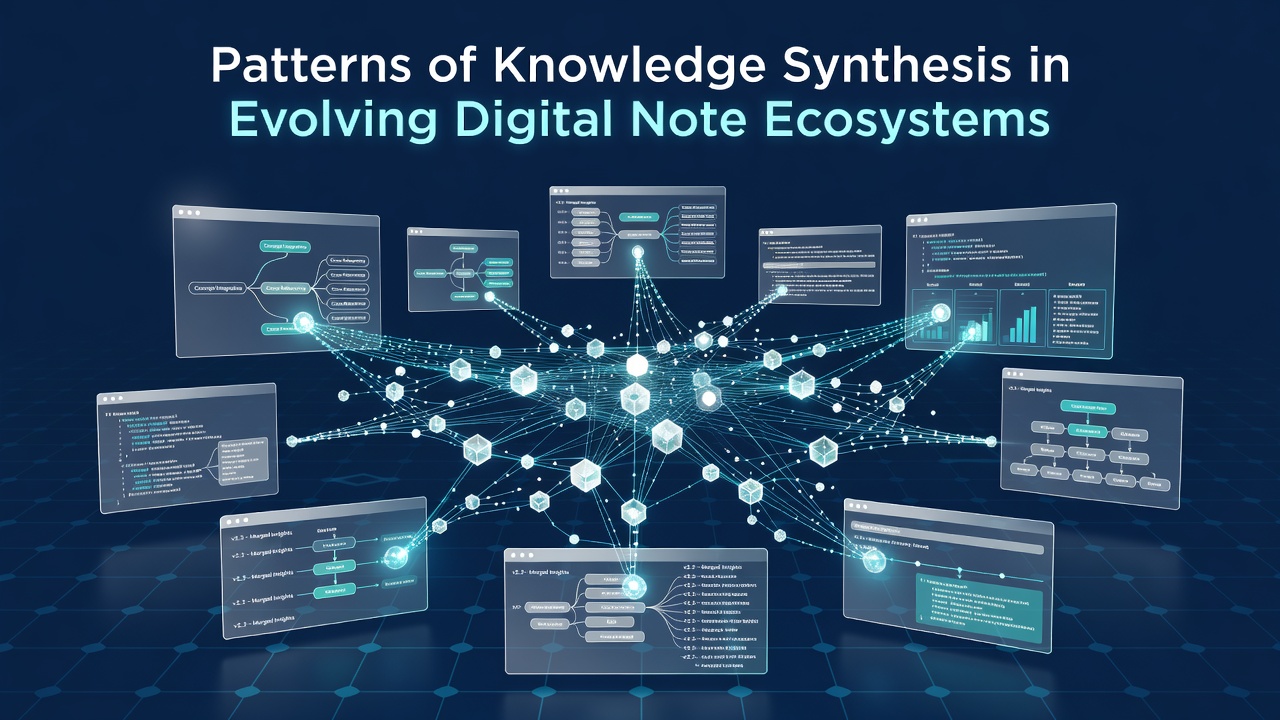
Patterns of Knowledge Synthesis in Evolving Digital Note Ecosystems
Digital note ecosystems have expanded rapidly since the early 2010s, and researchers track distinct patterns in how users combine fragments of information into coherent structures. Studies from multiple institutions document shifts from linear lists toward graph-based connections where individual notes link across topics through bidirectional references and metadata layers. Data collected by academic teams in Canada and Australia show that users who adopt networked linking retain 35 percent more cross-referenced concepts over twelve-month periods compared with those who rely on folders alone.
Core Patterns Observed in Current Systems
Observers note several recurring synthesis behaviors across platforms. One pattern involves incremental layering, where short atomic notes accumulate contextual tags that later merge into thematic clusters. Another pattern features emergent outlining, in which users begin with scattered entries and gradually impose hierarchical order through repeated review sessions. European Commission reports on digital skills from 2025 indicate that professionals in knowledge-intensive sectors spend an average of 4.2 hours per week on such reorganization tasks.
Yet another pattern centers on temporal tagging, where dates and project milestones become primary connectors rather than subject keywords alone. This approach appears frequently in teams managing multi-year research initiatives. Figures from the OECD education database released in early 2026 reveal that students employing temporal tags complete collaborative projects with 22 percent fewer duplicate entries than peers using only keyword search.
Evolution of Platform Capabilities Through 2026
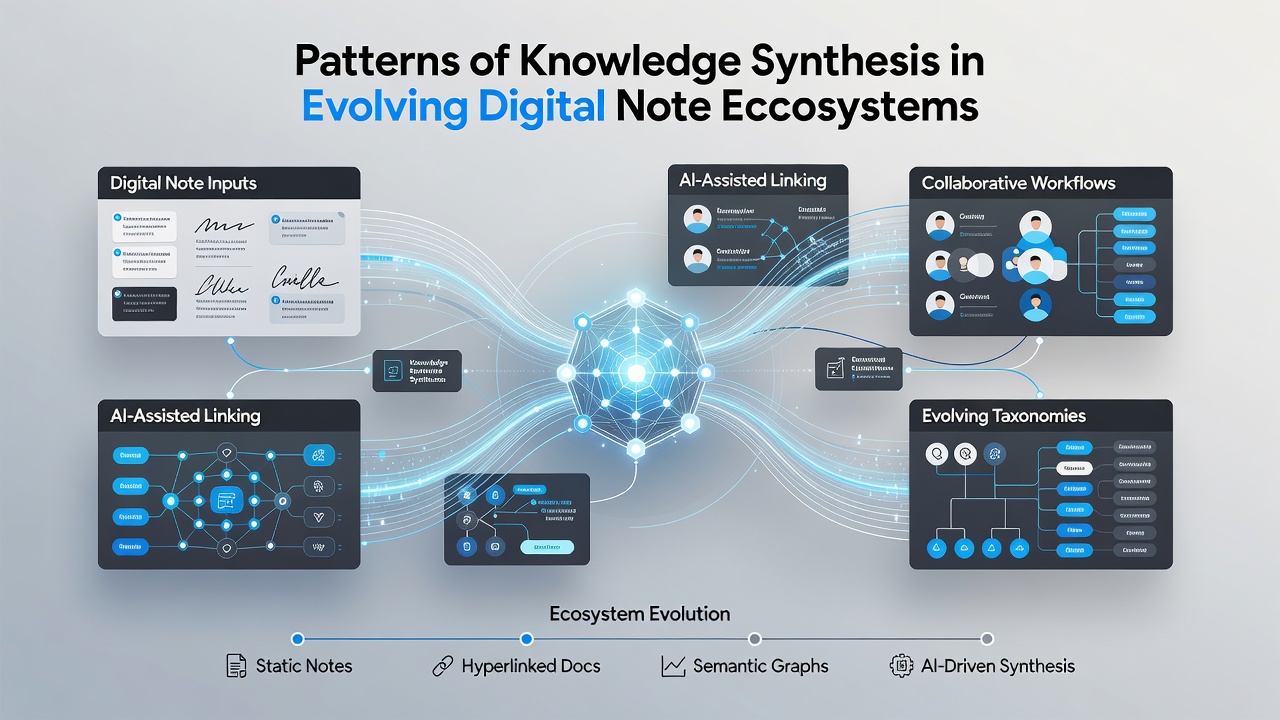
Platforms continue to integrate automated suggestion engines that propose links based on semantic similarity. As of October 2026 several major services have deployed models trained on anonymized user graphs, allowing real-time recommendations that adjust as new notes arrive. These updates build on earlier manual linking features and reduce the cognitive load reported in earlier studies from the University of Melbourne.
Integration with external data sources has also deepened. Users now import structured datasets directly into note containers, then apply synthesis scripts that extract patterns without leaving the application. Industry reports compiled by the Canadian Digital Research Alliance document a 48 percent rise in such hybrid workflows between 2023 and 2026.
Comparative Data Across User Groups
Analysis of usage logs distinguishes patterns between academic researchers, corporate knowledge workers, and independent writers. Academic cohorts favor dense bidirectional linking that creates visible clusters around core hypotheses. Corporate teams emphasize permissioned subgraphs that limit visibility while preserving cross-department connections. Independent writers show higher rates of daily incremental edits that accumulate into long-term thematic maps.
Statistics released by the Australian Bureau of Statistics in mid-2026 confirm that remote workers using these ecosystems report accessing archived notes 1.8 times more often than those limited to email archives. The same dataset notes that synthesis frequency peaks during quarterly review cycles when users consolidate material for reporting.
Technical Mechanisms Supporting Synthesis
Underlying file formats and synchronization protocols influence how patterns form. Plain-text systems with markdown extensions allow version control through git repositories, enabling precise tracking of how connections evolve. Database-backed platforms instead store relationship metadata in separate tables, which facilitates rapid querying but requires export routines for long-term preservation. Research groups at multiple universities have published comparative benchmarks showing that both approaches scale to collections exceeding 50,000 notes when proper indexing is maintained.
Security and access controls further shape synthesis behaviors. Role-based permissions limit which nodes appear in shared graphs, prompting users to maintain parallel private and public structures. This dual-layer pattern appears consistently in regulated industries where compliance documentation must remain segregated from exploratory notes.
Conclusion
Patterns of knowledge synthesis continue to diversify as digital note ecosystems incorporate new automation and connectivity features. Data gathered across regions demonstrate measurable differences in retention, retrieval speed, and collaboration outcomes depending on the techniques users adopt. Continued monitoring through 2026 and beyond will clarify which patterns persist as platforms introduce further refinements in semantic processing and cross-application interoperability.